Work at the mass grave from the Francoist violence in Serantes (Ferrol)
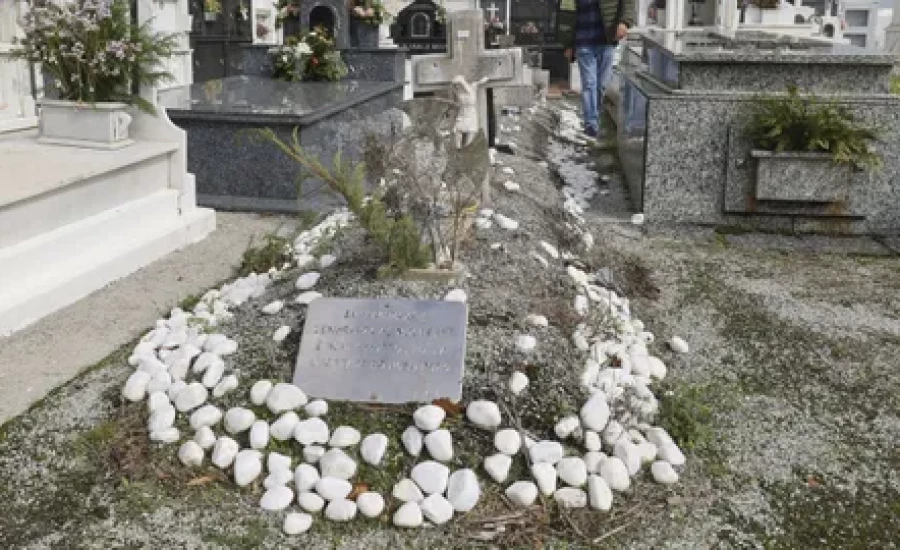
Work at the mass grave from the Francoist violence in Serantes (Ferrol)
Between Monday 31 August and Friday 11 September, an archaeological survey is taking place in Serantes (Ferrol), coordinated by the Histagra research group at the USC-CISPAC, with the aim of determining the location and condition of one of the mass graves from the Franco regime recorded in the cemetery. According to the preliminary historical study, carried out by researcher Lucía Santiago in collaboration with the relatives of the victims, at least 197 people were buried in various mass graves at the Serantes cemetery between 1936 and 1942, the majority during the months following the coup d’état. The data place this site amongst the locations in Galicia with the highest number of burials of victims of Francoist violence. Their names can be found in the section on the mass grave at Serantes Cemetery on the ‘Nombres y Voces’ website (https://nomesevoces.net/gl/lugares/cartografia/fosas/31/fosa-do-cemiterio-de-serantes).
The results of the archaeological study, coordinated by José Carlos Sánchez Pardo (the AEVUM group at the USC and CISPAC) and carried out in the field by Tempos Arqueólogos, will determine the next stages of the work. Should any skeletal remains be located, a forensic analysis will be carried out, coordinated by Edgard Camarós (USC’s GEPN-AAT group and CISPAC), which will confirm whether there are any signs of violence consistent with the aim of the investigation.
Framework of the agreement and project team
The project forms part of the agreement signed by the USC and the Provincial Council of A Coruña, with funding from the Ministry of Territorial Policy and Democratic Memory, which provides for historical, archaeological and forensic research into the Serantes cemetery (Ferrol), as well as those at Beira (Carral) and Boisaca (Santiago de Compostela). A multidisciplinary team from the USC is responsible for carrying out the research under the scientific coordination of Lourenzo Fernández Prieto and Antonio Míguez Macho, members of the Histagra research group (USC) and CISPAC. Histagra is responsible for conducting the historical analysis through the work of researchers Xurxo Antelo and Lucía Santiago. The archaeological study is coordinated by José Carlos Sánchez Pardo, a member of the AEVUM research group (USC) and CISPAC, and the company Tempos Arquéologos is carrying out the fieldwork. The forensic anthropological analysis is coordinated by researcher Edgard Camarós, a member of the GEPN-AAT group (USC) and CISPAC.